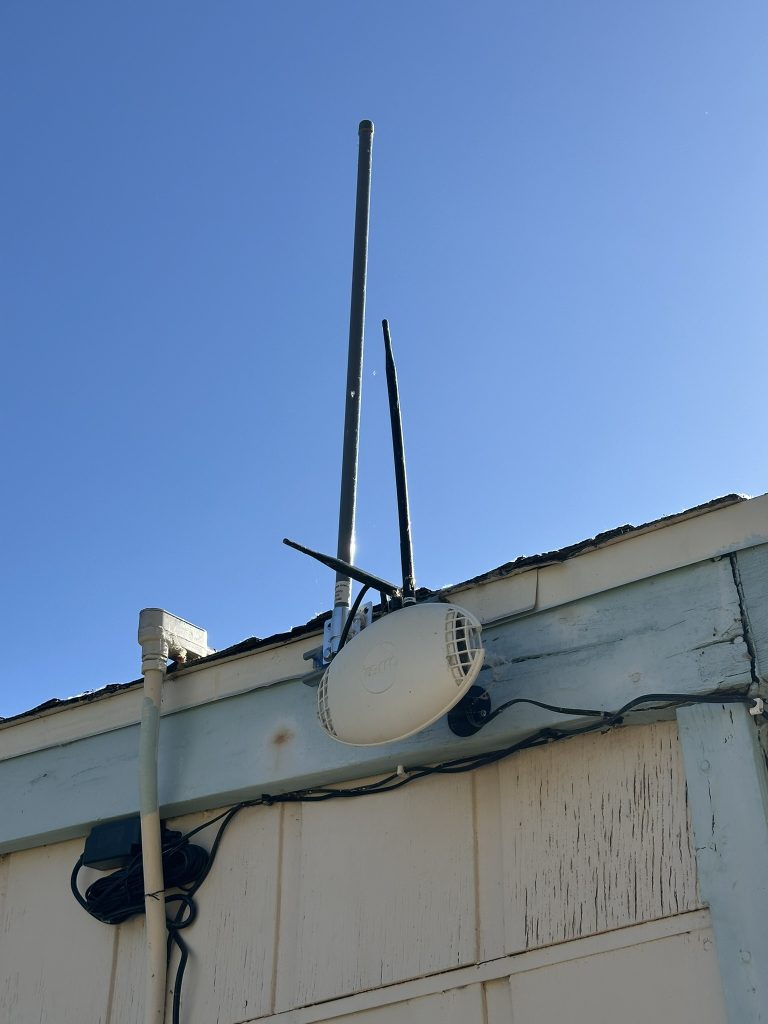
We are co-hosting a workshop about using “nodes”, essentially mini Motus stations, to detect tagged animals, register their activities, and triangulate their movements. These devices can detect radio tags near them and send the data to Motus.org via a nearby Motus station (see this page for more information on Motus). This workshop is the day before the main meeting of The Wildlife Society, Western Section in Monterey, CA, USA. There may be spots left if you want to register.
It is important that people do not try to find these birds this season as it might cause them to abandon the nest. If you are interested in trying to see cuckoos here, contact us through our contact form.
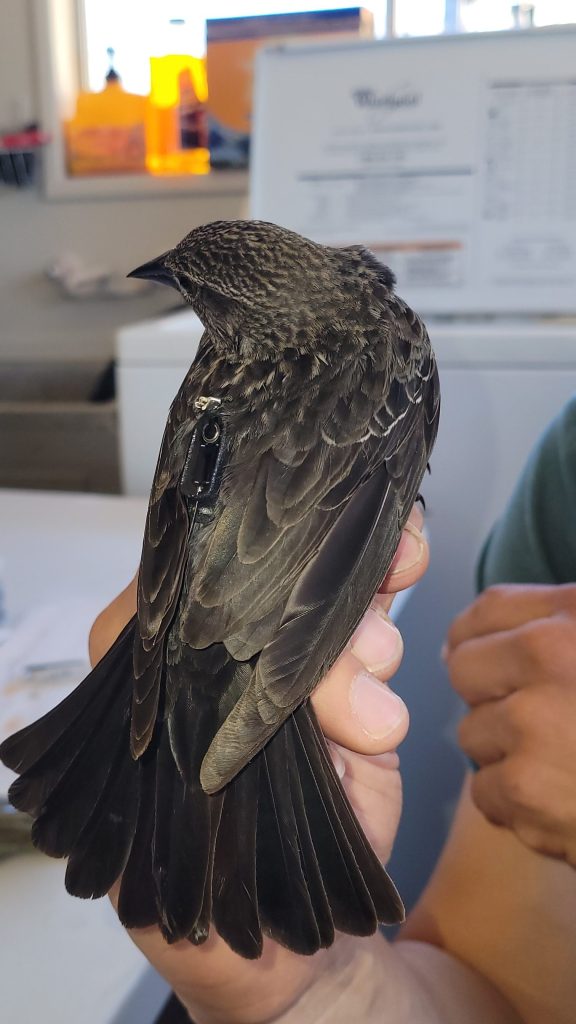
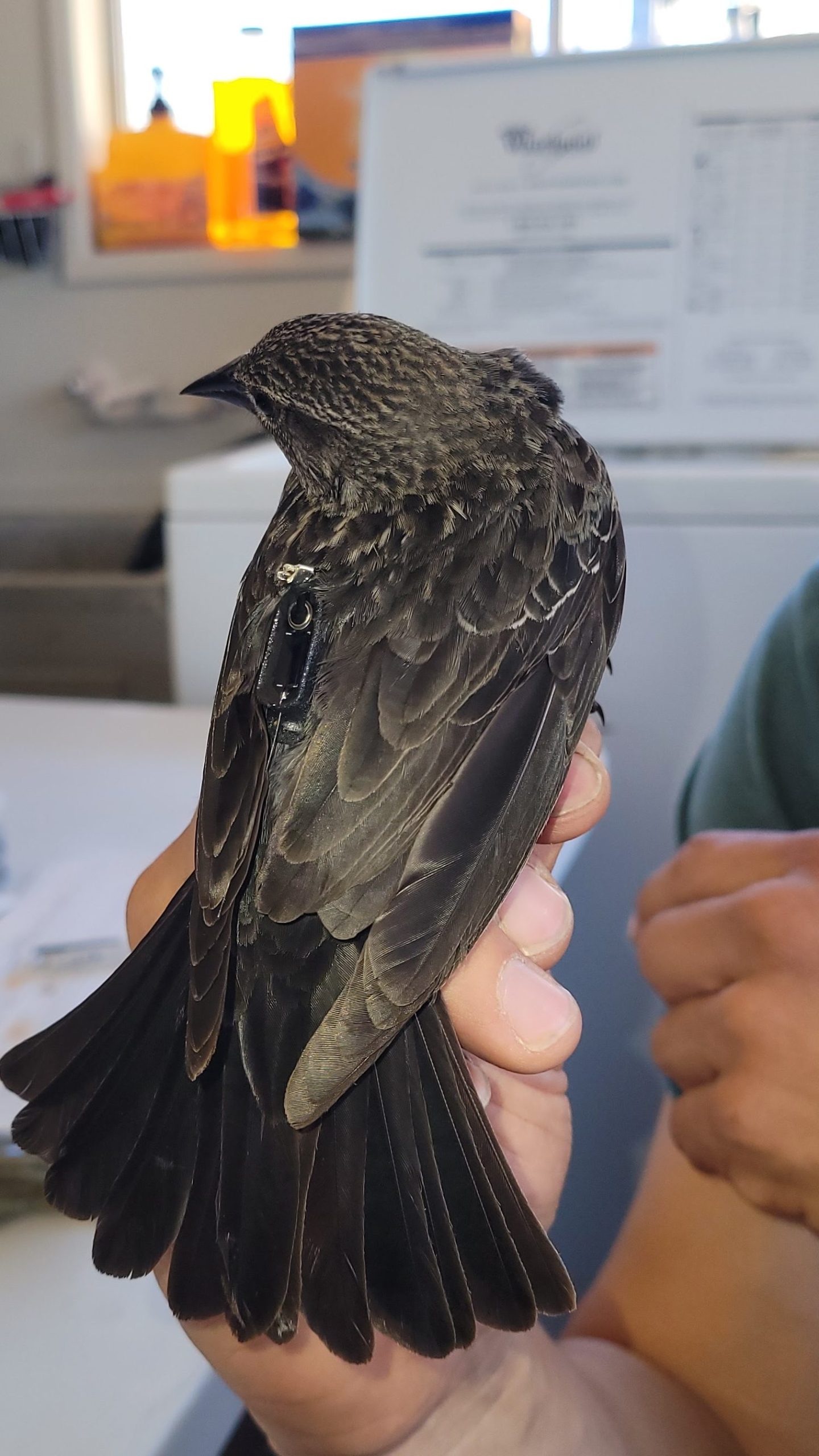
In 2025, we have 4 tagged cuckoos. These birds were captured early in the season in giant mist nets as they flew through the tall cottonwoods and willows. Then they were tagged with a radio tag and given colored leg bands to be able to identify them through binoculars. The tag allows us to estimate the location of the birds in the habitat so we can understand the movement and activity of the birds as they go about their daily activities.
We give the birds nicknames to help field observers talk to each other about individual birds so that they can record data on location, and behavior based on visual and auditory detections. This year’s birds are nicknamed using part of the genus of known food items. In the image below, White is referred to as Hyla, Green is Papilio, Red is Schisto, and Purple is Neo. Observer data is used to match up with data from tag detection “nodes” described below.

Estimated locations of four cuckoos from July 7 to August 7, 2025. Black dots represent ground detectors or nodes that detect tags. Colored dots represent location estimates from one time interval. Colored outlines represent an estimate of home range (based on 80% kernel density estimate) for each tagged bird.
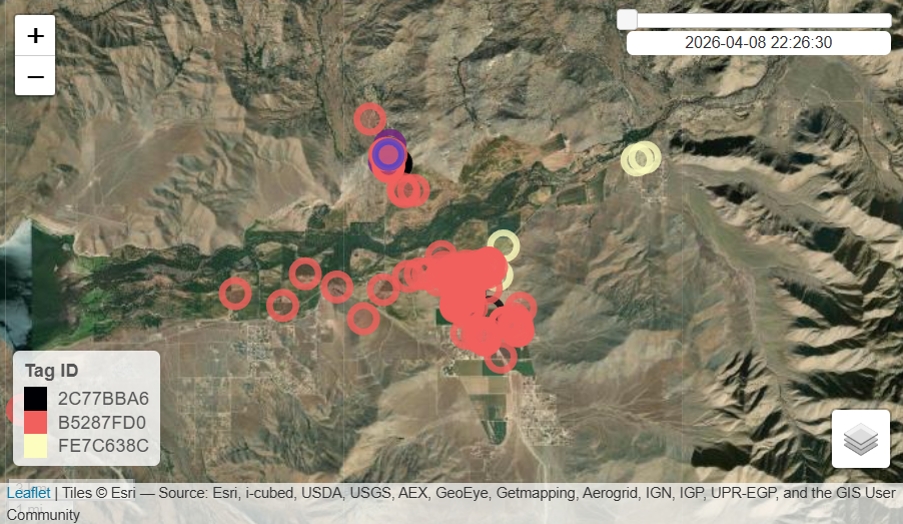
Using the signal strength recorded at adjacent nodes and a time stamp, a location estimate can be generated for a given time. The tags generate very large numbers of location estimates, as you can see (30 day period pictured). These locations can be used to estimate the home range used by individual birds to find food. Home ranges change as the birds move through different phases of their breeding cycle: from nest building, to incubating eggs, to feeding chicks, to feeding fledglings. We can look at these data in almost real time to understand which birds are being observed in the field. These data can also be used to find nests. We have successfully placed an additional node below the nest and have been able to use the signal strength patterns to understand what the birds are doing, for how much time in their day. The signal strength pattern can also tell us what phase of breeding they are in and when the transitions between phases happens.
To see how we have used signal strength data to estimate activity and breeding cycle phase, click on or download one of our recent posters: A novel way to monitor nests using Motus tagged birds and a CTT node
We have a video of location-tracking over time and of the giant mist nets on our Youtube channel. (Murrelet Halterman and others developed the canopy netting methods.)
We are thrilled to announce that at least two of the Western Yellow-billed Cuckoos that we tagged over the past three summers in the Kern River Valley (KRV) have returned. One of these birds, affectionately nicknamed Stroopwafle, was tagged in summer 2022. In 2023, it was detected by a Motus station at Mad Island Marsh, north of Corpus Christi, Texas on its northbound migration on June 15, 2023. It seemed to stay in the KRV for the summer during 2023, with the last tag detection being in August 2023. During this time we were able to track the bird’s movements using a network of tag detectors called nodes that can be used to estimate tag locations. Its tag has now stopped transmitting or has fallen off, but it has been identified using leg color bands.

June 2023 Stroopwafle position estimates based on node network detections.
Another tagged cuckoo, nicknamed Sphinx, that was tagged in 2023 has also been detected. Its Motus tag has stopped working but we can identify it by its colored leg bands.
A map of Stroopwafel’s 2023 migration detections: Motus Wildlife Tracking System
Not sure what Motus is? Curious to learn more? Check out our page explaining it and SSRS’s involvement here: Motus Tracking | Southern Sierra Research Station
See a 2024 post on last years cuckoo detections here: Our Yellow-billed Cuckoos are on their way back to the breeding grounds!
Our cuckoo work in the Kern River Valley, CA is currently unfunded, if you want to help support our work, we would greatly appreciate donations of any amount! We’re hoping to raise funds for 3 cuckoo tags for 2026.