Avian Field Technicians: join the Weldon Crew! – CLOSED
Location: Weldon, CA
Dates: Mid-May through mid-August, flexible start and end dates for the right candidate
Position Type: Full-time, seasonal technician positions (2-3)
About SSRS: The Southern Sierra Research Station is a non-profit organization located in the foothills of California’s Sierra Nevada Mountains, with a satellite office in New Mexico. Through basic and applied research, we aim to understand the biological processes that control population sizes and species diversity. In collaboration with government, academic, and conservation organizations, we strive to increase scientific knowledge of the species we research, many of which are endangered, so that we may better inform policy and encourage public appreciation.
Job Description: The Southern Sierra Research Station (SSRS) is looking for 2-3 seasonal, full-time avian field technicians to assist with multiple avian research and conservation projects. Working at our station, technicians will have the opportunity to be part of a small research community and gain training and experience in a variety of field research techniques, such as endangered species surveys, target-netting and bird-banding, point count surveys, radio telemetry and attaching Motus tags to birds, vegetation surveys, and Motus tower construction/data retrieval. The main projects are described below, however, depending on qualifications and interest, technicians may also have opportunities to work on other projects. Technicians are expected to help where needed as priorities shift through the field season and will be expected to take on some responsibilities that are not directly related to these main research projects.
Projects:
- Southwestern Willow Flycatcher (SWFL) population monitoring and conservation in the Kern River Valley. Technicians will conduct SWFL broadcast surveys, assist with brown-headed cowbird control by target-netting and trapping, and work as a team to conduct vegetation sampling.
- Western Yellow-billed Cuckoo (YBCU) population monitoring in the Kern River Valley. Technicians will conduct YBCU broadcast surveys and color band resighting on the South Fork Kern River and may assist with YBCU target-netting. There may also be opportunities to track tagged YBCU with handheld radio telemetry.
- Long-term avian monitoring in the Kern River Valley. Technicians with point count and/or strong visual + aural bird identification skills will conduct point count surveys for our long-term study monitoring avian populations on the South Fork Kern River and other monitoring projects. Point counters will participate in up to 2 weeks of point count surveys.
- MAPS (Monitoring Avian Productivity and Survivorship) bird banding station at the
Kern River Preserve. We are looking for one tech capable of leading or co-leading a mid-low volume MAPS station. All technicians will have the chance to assist at our MAPS station and will receive training in handling, banding and processing songbirds equivalent to a beginning bird banding workshop (~4-5 days over the course of the season).
- Least Bell’s Vireo nest monitoring for our small population in the Kern River Valley. Technicians will locate Least Bell’s Vireos opportunistically, determine breeding status and assist with nest monitoring.
- Motus station construction, maintenance, and data retrieval. Motus is a rapidly growing research tool for wildlife tracking (www.motus.org). We have several Motus projects here at SSRS, including both tagging birds and installing Motus towers (stationary radio receivers) across California. Technicians will assist with Motus station duties as needed; no previous experience required.
All projects require thorough data management skills and organization. Data entry and proofing will be a daily duty.
Required Qualifications:
- Must be in strong physical condition, with the ability to hike at least 5 miles, through wet overgrown areas, dense vegetation, and downed wood. Depending on spring runoff, this may include the use of waders.
- Must have an avid interest in wildlife biology, avian research/conservation and being outdoors.
- Must be patient, reliable, and able to persevere through difficult tasks.
- Ability to conduct work independently in the field, start work before dawn and hike to survey points before daylight.
- Must have a positive attitude and the ability to live and work well with coworkers. This includes being respectful to fellow staff and keeping shared spaces clean. Technicians are expected to share in household duties.
- Must be a U.S. citizen, possess a valid U.S. work visa, or be able to apply for a CUSMA (formerly NAFTA) work permit (for Canadian and Mexican Citizens). Unfortunately, we do not have the capacity to apply for work visas for residents outside of Canada and Mexico who do not already have a work visa.
- Must be at least 18 years of age.
- Technicians must be comfortable working in areas with stinging nettle, cattle, black bears, mountain lions, and rattlesnakes.
Preferred Qualifications:
- Bachelor’s degree in Natural Resources, Wildlife Management, Wildlife Biology, Zoology, Environmental Science, or a related field (or in progress).
- The ability to identify western songbirds by sight and sound. Training for all survey protocols will be provided, but prior bird identification skills are required. Non-work experience in bird ID is applicable! Applicants with prior experience performing avian point count surveys will be given preference.
- Mist-netting experience: please list separately your estimated number of birds extracted and banded if applicable and include at least one reference who can speak to your banding experience.
- Prior experience conducting avian research in the field.
- Prior experience conducting endangered species surveys.
- Willingness to travel for short multi-day trips to various field sites across southern California, as well as work pre-scheduled irregular hours on occasion.
- Ability to communicate clearly with coworkers and supervisors.
- Ability to navigate using GPS/map/aerial imagery and compass, previous experience using ArcGIS Field Maps app.
- Willingness to assist with occasional Motus tower construction (no previous experience required).
Enthusiasm for fieldwork, persistence, a great work ethic, and ability to deal with hard field conditions are more important than past experience or specific knowledge! We encourage you to apply even if you don’t meet the qualifications listed above.
Required Field Equipment: You must provide appropriate field clothing with the understanding that you will be working in wet and dense forests and your clothes will certainly get wet and dirty. Rubber boots and waders are provided. We will also provide all necessary equipment for the field research (e.g. GPS, work phone, speakers).
Work Schedule: 40hr work weeks, with overtime pay according to California State law. Must be willing to have atypical weekends (not Sat-Sun).
Compensation:
$680-750/week depending on experience for general avian technicians (2-3 positions). You will also receive 1hr/week of sick time, worker’s comp when applicable, and paid federal holidays.
Housing and Transportation: All positions include shared field housing in Weldon, CA, 5-10 minutes from most field sites. On the occasion you need to travel for work, housing in the form of a hotel or AirBnb will be provided along with a per diem. Field vehicles are provided in most cases, and we pay mileage for any use of personal vehicles for work.
Skills you will acquire: You will get a wide range of skills from this position, including experience with ESRI Field Maps, exposure to MAPS protocols, experience surveying for endangered species, in addition to many other things, along with a summer spent in a beautiful part of California! As the season progresses, we hope to tailor work to each technician based on skills and interests, but all technicians can expect to get experience in a wide array of research techniques.
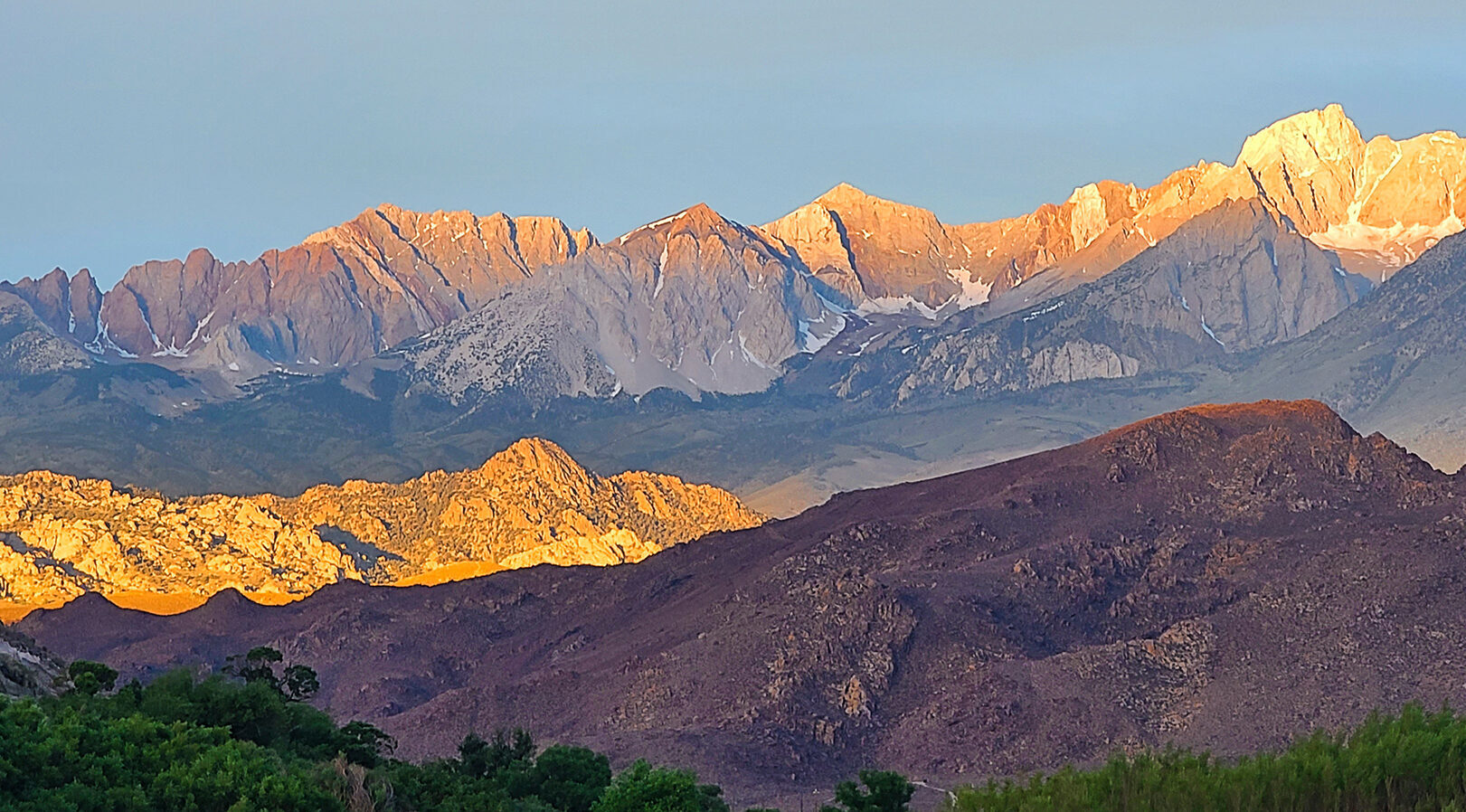
The Kern River Valley is located in the southern Sierra Nevada foothills at the junction of 3 of North America’s 10 floristic provinces. As a result, the landscape is incredibly diverse with an array of distinct habitats boasting many interesting endemics and rare species. This makes it a fantastic playground for naturalists, birders, and outdoor enthusiasts. Within a 30-mile radius of the station you can find extensive Great Valley Cottonwood Forest along the South Fork Kern River, towering Giant Sequoias in their southernmost groves, red fir forests at 9000ft elevation on the Kern Plateau, pinyon-juniper woodlands lining the valley slopes and enormous patches of Joshua Trees spilling over from the Mojave desert. The Kern River Valley and vicinity is a major stopover site for birds during spring migration, as well as a breeding site for Yellow-billed Cuckoo, Summer Tanager, Vermillion Flycatcher, Brown-crested Flycatcher, White-headed Woodpecker, Flammulated & Spotted Owls, Kern Red-winged Blackbird, Tricolored Blackbird, Black-chinned Sparrow, Black Swift, and LeConte’s Thrasher, to name just a few. Additionally, there are excellent opportunities nearby for river sports/whitewater, mountain biking, climbing, fishing, hiking/backpacking, etc.
Application process: Please apply via E-Mail with an attached single PDF that contains: 1) a CV/resume, 2) a cover letter detailing your interests and experiences, and 3) three references with E-Mails and phone numbers to Lee Sutcliffe (she/her) at jobs.ssrs@gmail.com by 16 February 2026. Please include your last name and position title in the file name and E-mail subject line. Feel free to reach out with any questions you may have with regards to the application process.
We will begin reviewing applications on February 1st and encourage applying before the deadline.
The Southern Sierra Research Station (www.southernsierraresearch.org) is an Equal Opportunity Employer and does not discriminate against applicants or employees because of race, color, religion, national origin, sex, gender identity, age, citizenship status, sexual orientation, or disability status of an otherwise qualified individual.
Experienced Avian Field Technician: join the Weldon Crew! – CLOSED
Location: Weldon, CA
Dates: April 1st through mid-August, flexible start and end dates for the right candidate.
Position Type: Full-time, seasonal technician positions (1-2)
About SSRS: The Southern Sierra Research Station is a non-profit organization located in the foothills of California’s Sierra Nevada Mountains, with a satellite office in New Mexico. Through basic and applied research, we aim to understand the biological processes that control population sizes and species diversity. In collaboration with government, academic, and conservation organizations, we strive to increase scientific knowledge of the species we research, many of which are endangered, so that we may better inform policy and encourage public appreciation.
Job Description: The Southern Sierra Research Station (SSRS) is looking for 1-2 seasonal, full-time avian field technicians to assist with multiple avian research and conservation projects. Working at our station, technicians will have the opportunity to be part of a small research community and gain training and experience in a variety of field research techniques, such as endangered species surveys, target-netting and bird-banding, point count surveys, radio telemetry and attaching Motus tags to birds, vegetation surveys, and Motus tower construction/data retrieval. The main projects are described below, however, depending on qualifications and interest, technicians may also have opportunities to work on other projects. Technicians are expected to help where needed as priorities shift through the field season and will be expected to take on some responsibilities that are not directly related to these main research projects.
Projects:
- Grassland surveys on the TNC Randall Preserve. Technicians may conduct spot-mapping and point count surveys in California’s annual grasslands, primarily at the beginning of the field season.
- Inyo California Towhee surveys. Technicians may assist in surveys for the endangered Inyo California Towhee in the Inyo mountains on China Lake Naval Air Weapons Base.
- Southwestern Willow Flycatcher (SWFL) population monitoring and conservation in the Kern River Valley. Technicians will conduct SWFL broadcast surveys, assist with brown-headed cowbird control by target-netting and trapping, and work as a team to conduct vegetation sampling.
- Western Yellow-billed Cuckoo (YBCU) population monitoring in the Kern River Valley. Technicians will conduct YBCU broadcast surveys and color band resighting on the South Fork Kern River and may assist with YBCU target-netting. There may also be opportunities to track tagged YBCU with handheld radio telemetry.
- Long-term avian monitoring in the Kern River Valley. Technicians with point count and/or strong visual + aural bird identification skills will conduct point count surveys for our long-term study monitoring avian populations on the South Fork Kern River and other monitoring projects. Point counters will participate in up to 2 weeks of point count surveys.
- MAPS (Monitoring Avian Productivity and Survivorship) bird banding station at the
Kern River Preserve. We are looking for one tech capable of leading or co-leading a mid- low volume MAPS station. This tech may start in May, depending on experience in other avian field experience. All technicians will have the chance to assist at our MAPS station and will receive training in handling, banding and processing songbirds equivalent to a beginning bird banding workshop (~4-5 days over the course of the season).
- Least Bell’s Vireo nest monitoring for our small population in the Kern River Valley. Technicians will locate Least Bell’s Vireos opportunistically, determine breeding status and assist with nest monitoring.
- Motus station construction, maintenance, and data retrieval. Motus is a rapidly growing research tool for wildlife tracking (www.motus.org). We have several Motus projects here at SSRS, including both tagging birds and installing Motus towers (stationary radio receivers) across California. Technicians will assist with Motus station duties as needed; no previous experience required.
All projects require thorough data management skills and organization. Data entry and proofing will be a daily duty.
Required Qualifications:
- Must be in strong physical condition, with the ability to hike at least 10 miles a day, up and down in high elevation, through wet overgrown areas, dense vegetation, and downed wood. Depending on spring runoff, this may include the use of waders.
- Must have an avid interest in wildlife biology, avian research/conservation and being outdoors.
- Must be patient, reliable, and able to persevere through difficult tasks.
- Ability to conduct work independently in the field, start work before dawn and hike to survey points before daylight.
- Must have a positive attitude and the ability to live and work well with coworkers. This includes being respectful to fellow staff and keeping shared spaces clean. Technicians are expected to share in household duties.
- Must be a U.S. citizen, possess a valid U.S. work visa, or be able to apply for a CUSMA (formerly NAFTA) work permit (for Canadian and Mexican Citizens). Unfortunately, we do not have the capacity to apply for work visas for residents outside of Canada and Mexico who do not already have a work visa.
- Must be at least 18 years of age.
- Technicians must be comfortable working in areas with stinging nettle, cattle, black bears, mountain lions, and rattlesnakes.
Preferred Qualifications:
- Bachelor’s degree in Natural Resources, Wildlife Management, Wildlife Biology, Zoology, Environmental Science, or a related field (or in progress).
- The ability to identify western songbirds by sight and sound. Training for all survey protocols will be provided, but prior bird identification skills are required. Non-work experience in bird ID is applicable! Applicants with prior experience performing avian point count surveys will be given preference.
- Experience working with and conducting surveys for endangered species.
- Experience nest searching and an interest in avian behavior.
- Mist-netting experience: please list separately your estimated number of birds extracted and banded and include at least one reference who can speak to your banding experience (if applicable)
- Prior experience conducting avian research in the field.
- Willingness to travel for short multi-day trips to various field sites across southern California, as well as work pre-scheduled irregular hours on occasion.
- Ability to communicate clearly with coworkers and supervisors.
- Ability to navigate using GPS/map/aerial imagery and compass, previous experience using ArcGIS Field Maps app.
- Willingness to assist with occasional Motus tower construction (no previous experience required).
Enthusiasm for fieldwork, persistence, a great work ethic, and ability to deal with hard field conditions are more important than past experience or specific knowledge! We encourage you to apply even if you don’t meet the qualifications listed above.
Required Field Equipment: You must provide appropriate field clothing with the understanding that you will be working in wet and dense forests and your clothes will certainly get wet and dirty. Rubber boots and waders are provided. We will also provide all necessary equipment for the field research (e.g. GPS, work phone, speakers).
Work Schedule: 40hr work weeks, with overtime pay according to California State law. Must be willing to have atypical weekends (not Sat-Sun).
Compensation:
$680-750/week depending on experience for general avian technicians (1-3 positions). $750-840/week depending on experience for experienced bander & point counter (1-2 positions). You will also receive 1hr/week of sick time, worker’s comp when applicable, and paid federal holidays.
Housing and Transportation: All positions include shared field housing in Weldon, CA, 5-10 minutes from most field sites. Housing in the form of a hotel or AirBnb will be provided on the occasions you need to travel for work along with a per diem. Field vehicles are provided in most cases, and we pay mileage for any use of personal vehicles for work.
Skills you will acquire: You will acquire a wide range of skills from this position, including experience with ESRI Field Maps, exposure to MAPS protocols, experience surveying for endangered species, in addition to many other things, along with a summer spent in a beautiful part of California! As the season progresses, we hope to tailor work to each technician based on skills and interests, but all technicians can expect to get experience in a wide array of research techniques.
The Kern River Valley is located in the southern Sierra Nevada foothills at the junction of 3 of North America’s 10 floristic provinces. As a result, the landscape is incredibly diverse with an array of distinct habitats boasting many interesting endemics and rare species. This makes it a fantastic playground for naturalists, birders, and outdoor enthusiasts. Within a 30-mile radius of the station you can find extensive Great Valley Cottonwood Forest along the South Fork Kern River, towering Giant Sequoias in their southernmost groves, red fir forests at 9000ft elevation on the Kern Plateau, pinyon-juniper woodlands lining the valley slopes and enormous patches of Joshua Trees spilling over from the Mojave desert. The Kern River Valley and vicinity is a major stopover site for birds during spring migration, as well as a breeding site for Yellow-billed Cuckoo, Summer Tanager, Vermillion Flycatcher, Brown-crested Flycatcher, White-headed Woodpecker, Flammulated & Spotted Owls, Kern Red-winged Blackbird, Tricolored Blackbird, Black-chinned Sparrow, Black Swift, and LeConte’s Thrasher, to name just a few. Additionally, there are excellent opportunities nearby for river sports/whitewater, mountain biking, climbing, fishing, hiking/backpacking, etc.
Application process: Please apply via E-Mail with an attached single PDF that contains: 1) a CV/resume, 2) a cover letter detailing your interests and experiences, and 3) three references with E-Mails and phone numbers to Lee Sutcliffe (she/her) at jobs.ssrs@gmail.com by 1 February 2026. Please include your last name and position title in the file name and E-mail subject line. Feel free to reach out with any questions you may have with regards to the application process.
We will begin reviewing applications on January 20th and encourage applying before the deadline.
The Southern Sierra Research Station (www.southernsierraresearch.org) is an Equal Opportunity Employer and does not discriminate against applicants or employees because of race, color, religion, national origin, sex, gender identity, age, citizenship status, sexual orientation, or disability status of an otherwise qualified individual.
Field Biologists- New Mexico Pinyon Jay Surveys: OPEN
Location: Across New Mexico
Dates of Employment: March to May.
Application deadline: Application review will begin on January 20 and continue until the positions are filled.
Number of Openings: 4
Job Description: The Southern Sierra Research Station is looking for field biologists to conduct Pinyon Jay (PIJA) surveys in pinyon-juniper (P-J) woodlands across New Mexico.
The project aims to assess PIJA occupancy of P-J woodlands across the New Mexico. Survey training will be provided to teach the methods used to conduct surveys and collect field data and enable accurate PIJA identification by sight and sound. Field work will be conducted five days a week, in various P-J habitats, from open Juniper Savanna to persistent P-J/ Ponderosa Pine woodlands. Study sites will be 2.5 km2 locations randomly selected across the state.
Surveys will generally be conducted on foot, starting at sunrise and will usually require 3-4 hours to complete. While walking the study site searching for PIJA, field data will be recorded on personal smart phones using the ESRI Field Maps app (a login will be provided). Data will be proofed (QA/QC’d) following the completion of the survey and be synced with an online database (an ArcGIS Online Map) when the internet is next available. Following the completion of a survey, field staff will drive to the next scheduled study site and prepare for the following day’s survey.
From March to May, variable weather (rainy, cloudy, and sunny) and temperatures (cold mornings to warm afternoons) are expected. Off-road/off-trial surveys will require hiking up to five-miles per day and navigating using maps, compass, aerial images, and smart phone app (Field Maps). Housing will not be provided, but a daily per diem will be paid to offset expenses. Staff are generally expected to camp at or near the survey site the night before surveys are to be conducted. Use of a personal vehicle is required (mileage will be reimbursed). Accessing survey sites will require driving on dirt roads; a high clearance vehicle may be desirable, but 4-wheel drive travel is not expected.
Required Qualifications:
- Patience and persistent observation needed to carefully locate our target species is required. Training of the PIJA survey protocols will be provided, but prior bird identification skills are preferred.
- Applicants with prior pinyon-juniper bird experience preferred.
- A valid driver’s license, and attention to detail is a must. Use of a reliable personal vehicle will be required. Work related mileage will be recorded and reimbursed.
- Experience navigating using a smartphone app, GPS (recording waypoints and tracks), aerial photos, and/or topo maps preferred.
- Previous experience recording field data on a mobile device (tablet/smart phone) and using ArcGIS Field Maps app preferred. Applicants must be responsible to ensure that electronic devices are charged daily.
- Applicants must be in good physical condition, as long hours hiking over variable terrain will be required. Applicants must be confident navigating in a remote wooded areas.
- The applicant is expected to work independently, to accomplish surveys and data entry/proofing on schedule.
Applicants should email a single file (word or pdf) which includes 1) a cover letter stating their interest in the position and dates of availability, 2) a resume, and 3) names and contact information (email and phone) of three references to: John Stanek at the following email address: jobs.ssrs@gmail.com. Include your name and “NM PIJA” in the file name of your attachment (e.g. LastName_FirstInitial_NM PIJA.doc) and in your email subject line. The Southern Sierra Research Station (www.southernsierraresearch.org) is an Equal Opportunity Employer.
Salary: is $19.00 – 22.50/hour, depending on experience. Mileage will be reimbursed $0.65 per mile, and a per diem of $75 per day worked will also be paid.
Contact Person: John Stanek
Contact e-mail: jobs.ssrs@gmail.com
____________________________________________________________________________________________________________
Reviews!
Wondering what a technician position with SSRS would be like? Here are some quotes from our 2023 Weldon techs:

“I have unending amounts of wonderful things to say about this position! … I love how every week is different; very few days feel the same throughout the entirety of the season. The work is so much fun, I feel like I was always having a good time because I was always doing something interesting…. The whole community at the station is absolutely delightful and it’s been such a privilege to work with everybody. I genuinely enjoy each person who works here…and I felt that everyone clearly prioritizes the wellbeing and health of the techs.”
“Yes, I would work here again. The work environment is amazing, surround by devoted, caring, and hardworking people is a hard thing to beat. “
“lots of educational opportunities with everyone working at the station – a great sense of community – working on a diversity of projects, getting to travel, and learn a wide variety of skills – felt like my boss was really looking out for each tech and making sure we all got enough time on each project“

“The impressive variation in surveys, tasks, and jobs meant the job never got stale, and kept me fully engaged. As a result of this variation, I learned a huge amount, much of it I know will be useful for future jobs.”
“I would absolutely love to work for SSRS again! It would be such an honor to return.“